
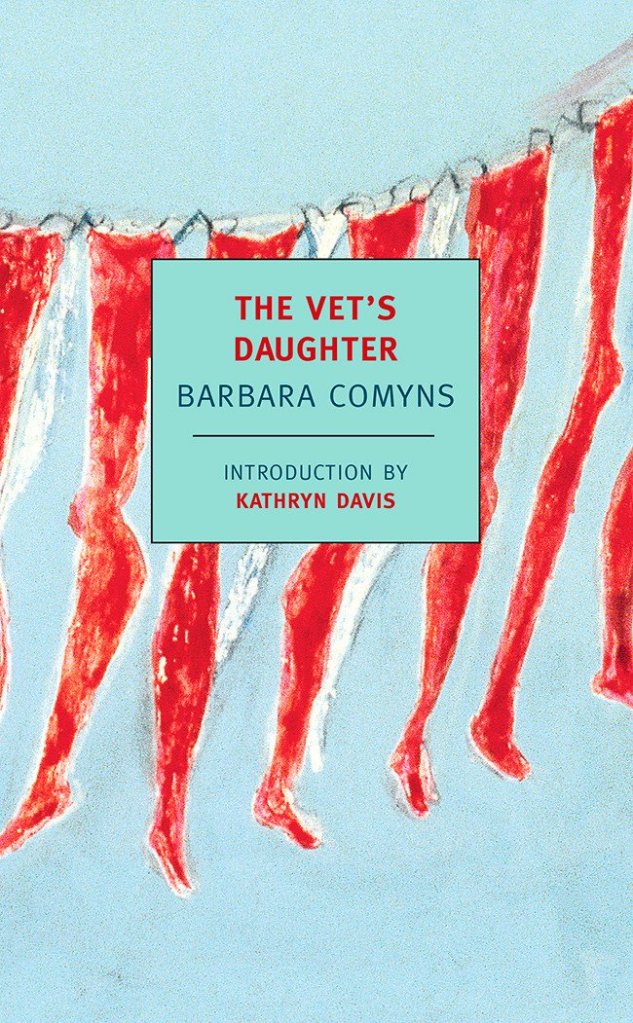
The Vet’s Daughter by Barbara Comyns is a quick, smart, and rather dark story about corrupted powers seeking to take advantage of the natural and innocent. The 200-page novel is narrated by Alice Rowlands, a young girl and veterinarian’s daughter living in Edwardian London. After the death of her mother, the abuse Alice endures in her father’s home escalates to the point of discovery. One night, after a traumatic experience with a man forced on her by her father’s housekeeper, Alice discovers she can levitate. Alice’s powers of levitation manifest originally as an innocent and desperate attempt at escape, but she quickly learns that others regard her ability as something strange and somewhat frightening. At best, she is looked on in disgust by a young sailor whom she fancies. At worst, she is treated as a creature to be controlled and exhibited by her cruel and money-hungry father.
The landscape of Alice’s father’s home is less like the clean and friendly environment associated with modern day veterinary offices and more like a house of horrors. Alice describes the animals – both alive and taxidermied – that populate the place as grotesque and disturbing fixtures. The contrast between these creatures and the lovely, docile, description of Alice herself reflects the larger contrast between the natural world and urban London that is at constant play in the novel. Edwardian London was a place defined by technological advancements, social shifts, and growing anxiety about the waning power Great Britain exerted over the rest of the modern world. Comyns captures this temperament in the aggressive and possessive attitudes of the men in her novel. Their attempts to own, control, and bully animals and women alike reflect the darker side of modernity in 20th Century England. When Alice is sent to live as a companion to a lonely older woman in Wales, she finds the first true reprieve of her life in the beauty and peace of the forests on the island. It is here that she learns to embrace her ability to levitate, seeing it as a natural part of herself, although one she would rather hide for fear of being “peculiar.”
Comyns’s novel paints a world of great contradictions – masculine vs. feminine, modern vs. natural, cruel vs. innocent – and translates them through the filter of a wide eyed girl who knows too little of the world to make much sense of it. Alice is extremely likeable. Her constant suffering and relentless optimism are made fairytale-like by Comyns’s lush imagery and subtle magical realism. The Vet’s Daughter captures the feeling of floating above all the madness and sadness of the modern world. I would recommend it for anyone who enjoys rich, emotional storytelling with a touch of magic.
I really enjoyed The Vet’s Daughter! I gave it 4.75 stars for using stylishly simple language and storytelling uniques to craft a narrative I feel confident will linger.
Check out my profile on StoryGraph to see what I’m reading right now:)
 all my marbles
Leave a comment